
Why ‘alignment’ is the wrong word — and the wrong goal
Inspired by a tip sheet from HBR, previewing an article on ‘false alignment’ in change efforts. The advice is well-intentioned. The framing, however, reveals exactly the problem it claims to solve.


The word does the damage
Before we even get to the tips, let’s look at the word.
Alignment. It’s everywhere in business. We talk about aligning stakeholders, aligning strategy, aligning teams. Senior leaders demand it. Consultants promise it. Project plans assume it.
But what does the word actually conjure? Gears meshing. Wheels tracking straight. Vectors pointing in the same direction. It’s a mechanical metaphor — borrowed from engineering, applied to human beings. And like most borrowed metaphors, it quietly smuggles in a set of assumptions: that organisations are machines, that people are components, and that the job of leadership is to get everything pointing the same way before pressing go.
This matters because metaphors don’t just describe organisations. As Gareth Morgan observed decades ago, the metaphors we use to think about organisations shape how we lead them. Use a machine metaphor long enough and you start managing accordingly — seeking precision, minimising friction, treating disagreement as a fault to be corrected rather than information to be used.
Which is precisely where the alignment obsession leads us astray.
The ‘tips’ that don’t solve the problem
The HBR advice is, on its surface, reasonable. Create clarity. Surface disagreement early. Document decisions. Communicate one message.
Fine. But here is the uncomfortable question none of these tips addresses: what happens when the leader driving the process is also the one with the most to lose from genuine disagreement surfacing?
A skilled political operator — and most senior leaders are, by necessity, political operators — will navigate every one of these steps without breaking stride. Ask people to write down what they support, oppose, or feel uncertain about? They’ll write something polished and strategic. Formalise the decision and make individual commitments explicit? They’ll commit to the words, not the intent. Communicate one clear message? They’ll control the message.
The tips don’t eliminate false alignment. They formalise it. The problem isn’t that teams lack the right process for reaching alignment. The problem is that alignment — true, complete, durable alignment — is a fiction in any organisation dealing with complexity.
And most organisations are dealing with complexity, almost all of the time.
Two conversations that need to happen
Here is something I have observed consistently across programmes and organisations: there are always two conversations running in parallel. One is visible. One is not.
The visible conversation is about performance. Are we on track? Are milestones being met? Are the numbers where they should be? These are legitimate and necessary questions. I’ve come to call them yellow questions — clear, specific, measurable. They light up dashboards. They fill steering committee agendas. They are the grammar of most governance meetings.
The invisible conversation is about direction. Even if we are following the path accurately — are we heading to the right destination? Are the assumptions we made six months ago still sound? Are the people in this room being honest with each other, or are we performing a version of confidence that none of us quite feels? These are blue questions. They are harder to ask, harder to answer, and almost impossible to address when a room is primed for yellow.
Both conversations need to happen. In most organisations, only one does.
The reason is not that leaders are incapable of blue thinking. It is that yellow and blue genuinely require different modes of engagement — different postures, different language, different levels of psychological safety. Yellow is transactional. Blue is relational. Trying to do both in the same governance meeting, without preparation or structure, usually means yellow wins by default. The dashboard is on the screen. The metrics are in the pack. The pressure is implicit and immediate.
Blue questions get deferred. Then they get forgotten. Then — months later — they surface as crises.
What organisations actually look like
People who read my newsletters know that I have made my own journey to make sense of organisations. Indeed, I landed on Ralph Stacey’s work on complexity in organisations to offer a more honest picture of why blue questions matter so much. Organisations are not machines running on shared intent. They are webs of conversations, relationships, histories, and competing interests — permanently in motion, never fully resolved. Stability isn’t achieved by eliminating tension; it emerges from navigating it continuously.
Consider a programme director leading a large IT-enabled transformation at a financial services firm. Three months in, she notices a persistent undercurrent — the operations director and the finance director are never quite in the same room on priorities, but they’re never openly in conflict either. Both are ‘aligned’ on the steering committee. Both sign off the minutes. And yet the programme is quietly drifting. The lack of friction isn’t a sign of alignment. It’s a sign that neither has fully committed.
This is not a failure of process. It is not solved by better documentation or a clearer RACI. It is a human system behaving exactly as human systems do — with ambiguity, self-interest, and the instinct to avoid exposed positions until absolutely necessary. The yellow questions — are we on track? — are being answered confidently. The blue questions — do we actually want the same outcome here? — are not being asked at all.
Yellow Weeks and Blue Weeks
In practice, I have found that the most effective way to create space for blue thinking is to separate it structurally from yellow thinking — at least initially.
I have introduced what I call yellow weeks and blue weeks in governance rhythms. Yellow weeks run the normal agenda: progress, metrics, risks, decisions. Blue weeks operate under a different rule: no hard metrics allowed. Not because the metrics don’t matter, but because their presence — on screens, in packs, in people’s minds — makes it almost impossible to have a genuinely exploratory conversation. Remove them, and something shifts. People talk differently. They ask questions they’ve been carrying for weeks. They admit uncertainty they’ve been concealing behind status updates.
In one large programme in the energy sector, the introduction of blue weeks produced an unexpected result. Within three sessions, a senior stakeholder raised a concern about the strategic direction of the programme that no one had surfaced in almost two years of steering committee meetings. It wasn’t that the concern was new — it had been present all along. It had simply never had the conditions it needed to be spoken aloud.
This isn’t a soft exercise. Blue weeks are where the real work of coherence happens — where the organisation learns to have the conversations that performance pressure usually crowds out. Yellow weeks keep the programme honest about where it stands. Blue weeks keep it honest about where it’s going and whether that still makes sense.
Over time, something interesting happens. Teams that go through this rhythm — that practise both modes separately — begin to develop the capacity to hold both in the same room. They become fluent in both languages. When that maturity arrives, the distinction between yellow week and blue week can be dissolved. The governance meeting becomes what I call a green meeting: yellow and blue (the choice of colours are no coincident 😉), performance and honesty, progress and direction — in productive conversation with each other.
Where I have introduced this and watched a team reach green, we have marked the moment. Celebrated it, even. Because it represents something genuinely rare: an organisation that has learned to be honest with itself, at pace, under pressure.
Try Coherence instead of Alignment
The yellow/blue distinction points to something deeper about what we are actually trying to achieve in organisations — and why ‘alignment’ is the wrong goal.
A coherent organisation doesn’t require everyone to want the same thing. It requires that the parts hold together in a way that makes sense — that the strategy, the structures, the conversations, and the behaviours are mutually intelligible, even if imperfect, even if still in motion.
Coherence tolerates disagreement. It often depends on it. Productive tension between a commercial director pushing for speed and an operations director pushing for quality isn’t misalignment to be fixed — it’s a coherent organisation working through a genuine trade-off. The job of leadership is not to eliminate that tension but to hold it within a frame strong enough to contain it.
Alignment asks: are we all pointing the same way?
Coherence asks: do we understand each other well enough to move — and are we honest enough to know when that understanding is starting to fray?
The first question invites performance. The second invites the kind of honest engagement that blue weeks are designed to make possible.
Coherence also has a more honest relationship with time. Alignment implies a fixed point — a destination where everyone arrives together. Coherence is a condition that must be maintained, tended, tested. It can degrade. It needs active attention. That is not a weakness in the model. It is simply a truthful description of how organisations work.
Final Thought
The HBR article promises to help leaders avoid the ‘false alignment trap’. But the trap is not a failure of method. It is a failure of metaphor — and beneath that, a failure to acknowledge that performance and honesty are different conversations, requiring different conditions, and that most governance structures are designed to host only one of them.
Reaching green — the capacity to hold both in the same room, at the same time — is not a process outcome. It is a cultural one. It takes time, deliberate structure, and leaders willing to ask the questions that dashboards cannot answer.
The wicked question worth sitting with is this:
In your governance meetings, which colour dominates — and what would it cost you to make space for the other?
About the author
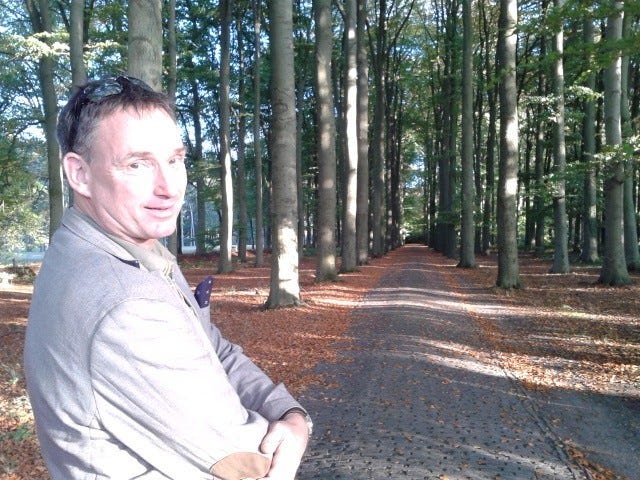
I’m Frank Smits, a change and transformation consultant with about 30 years of international experience helping organisations navigate complex business and IT-driven change. I have particular expertise in setting up and managing global HR programmes, including the implementation of HRIS solutions such as SAP SuccessFactors.
I’ve worked with global teams across industries and cultures to deliver major transformations—balancing strategy, execution, and the human side of change. Based in Europe, I work in multiple languages and thrive on making change practical, collaborative, and real.
What I can offer:
I help you shape and manage the engagements to achieve your business outcomes. By bringing in my specialist programme management, change and transformation expertise. From initiation through to implementation. Or any part thereof. This includes leading large-scale business change initiatives, from digital transformation to complex HR programmes.
As executives, you may need a discrete partner to test your ideas. Or get fresh, new ones. I will act as your sparring partner. To having the right conversations. Helping you succeed. This applies to all areas of business leadership—including how to navigate and lead major HR change or transformation initiatives.
Expertise in designing and facilitating innovative and engaging interventions. And, if needed, I can convene a variety of experts from my extensive network (academics, peers, consultants, active retirees) to open up new thinking. In HR programme leadership, this means bringing together key stakeholders—HR, IT, business leaders, and external partners—to drive alignment and engagement.
Sometimes you would like your leaders to get dedicated, customised, specialist education. To enhance your capabilities. To possibly change the conversation. HR leaders facing major change or transformation also need the right tools and perspectives to guide their teams. I can help build that capability.
Find me on LinkedIn: https://www.linkedin.com/in/franksmits