
The art of conversation
How insights from three articles from The Economist help shape our understanding of the very fabric of our organisations.


Introduction - Conversations. Again.
Conversation, as a fundamental element of human interaction, plays a pivotal role in shaping the intricate tapestry of societal dynamics. It is through conversation that ideas are exchanged, narratives are woven, and collective understandings are forged. The ability to engage in meaningful dialogue not only reflects individual communicative prowess but also bears far-reaching consequences for the broader community.
On these pages, starting with the very first article in 2017, we have often talked about conversation as the fundamental element that is the process of organisation: it is the organisation itself, if you like.
In this week’s more in depth exploration, we delve into the insights gleaned from two articles that shed light on diverse facets of conversation – "Chattering Classes" (Part 1) and "The Vital Art of Talking to Strangers" (Part 2). These articles, both from the esteemed pages of The Economist, offer a nuanced perspective on the impact of conversations on society, from intellectual discourses within specific social echelons to the transformative potential of engaging with the unfamiliar.
As we navigate through these discussions, we unravel the threads that bind conversations to the fabric of societal evolution, exploring how the chattering classes influence narratives and why talking to strangers becomes an indispensable catalyst for personal and collective growth.
Additionally, in Part 3 we examine the importance of active listening, an often overlooked skill that serves as the linchpin for fostering understanding and forging meaningful connections.
Together, these articles provide a compelling mosaic of insights, inviting us to rethink and reevaluate the dynamics of our daily conversations in the context of broader societal implications (Part 4).
Part 1 - Intellectual conversations and societal narratives
In the corridors of intellectual discourse, the phenomenon of the chattering classes emerges as a distinct social group, wielding influence that extends far beyond the confines of their exclusive conversations. The article (from 2006) "Chattering Classes," as presented by The Economist, delves into the impact of intellectual conversations within these specific social echelons and their profound role in shaping societal narratives.
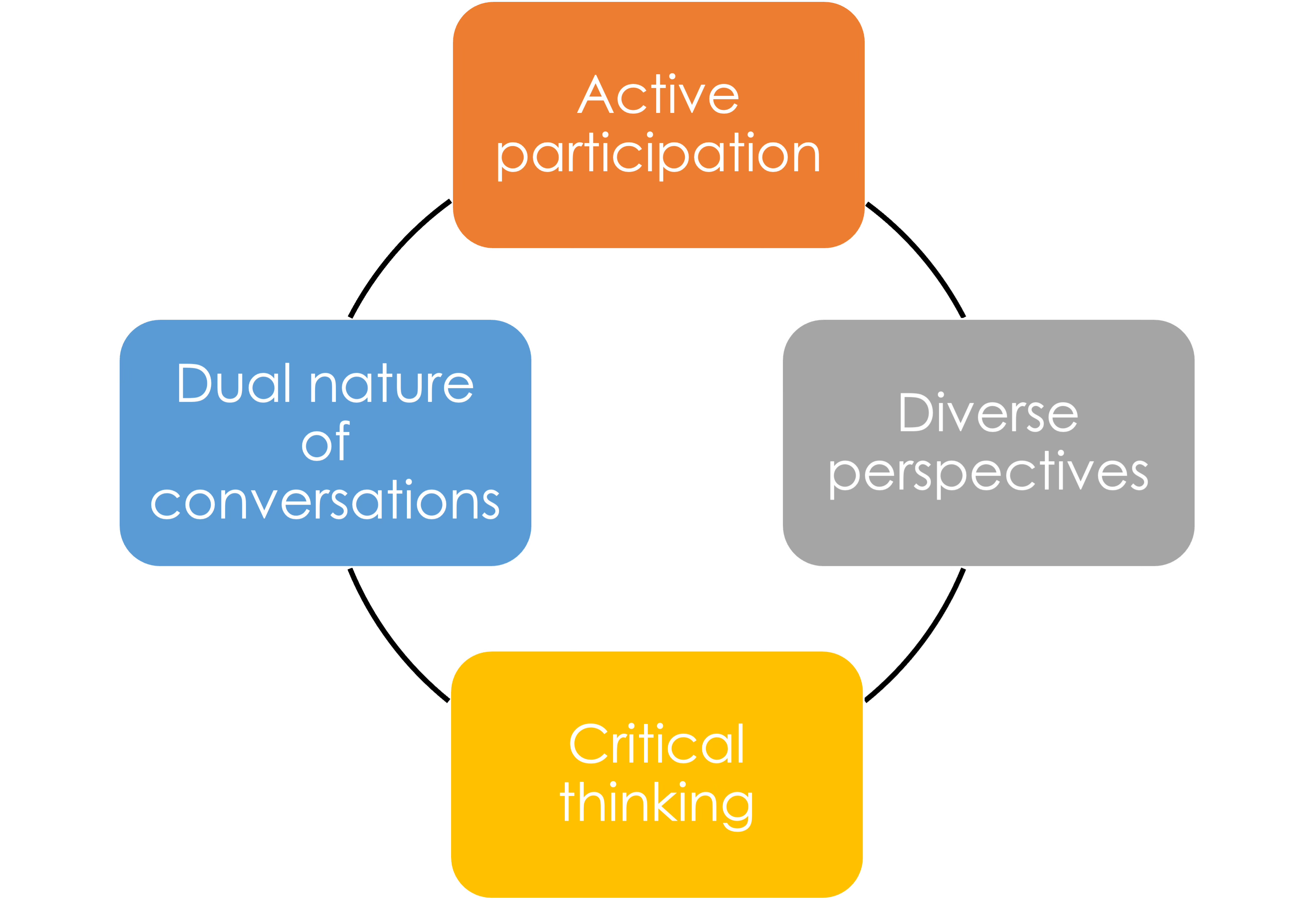
The chattering classes, characterized by their penchant for intellectual engagement, consist of individuals who actively participate in discussions that span a wide array of topics, from politics and philosophy to arts and sciences. These conversations, often conducted within the realms of academia, media, and elite circles, hold a unique sway over the formation of societal narratives. The key premise of the article lies in the recognition that ideas incubated within these intellectual enclaves percolate into the broader societal consciousness, influencing public discourse and shaping collective perspectives.
Diverse perspectives emerge as the lifeblood of these intellectual conversations. The chattering classes, by their very nature, bring together individuals with varying backgrounds, experiences, and expertise. This diversity fosters a rich tapestry of viewpoints that serve to challenge preconceived notions and enrich the quality of discussions. The article underscores the idea that it is the clash of ideas and the synthesis of diverse perspectives that propel intellectual conversations beyond mere rhetoric, infusing them with the potential to redefine societal narratives.
Critical thinking emerges as a linchpin in the chattering classes' intellectual engagements. The ability to question, analyse, and dissect ideas is not merely a scholarly pursuit but a societal responsibility shouldered by these individuals. The article suggests that critical thinking within these conversations serves as a safeguard against dogma and myopia, allowing for the continuous evolution of thought. By questioning assumptions and scrutinizing arguments, the chattering classes contribute to the resilience of societal narratives, preventing stagnation and ensuring adaptability in the face of changing paradigms.
Moreover, the article hints at the dual nature of intellectual conversations within the chattering classes – as both a reflection of societal currents and a source of societal influence. The narratives woven within these circles are not insular but permeate the broader societal discourse, shaping public opinion, policy decisions, and even cultural norms. The chattering classes, by virtue of their intellectual pursuits, become arbiters of thought, guiding the trajectory of societal narratives through the power of ideas.
In summary, the "Chattering Classes" article illuminates the profound impact of intellectual conversations on societal narratives. Through the synergy of diverse perspectives and critical thinking, the chattering classes emerge as catalysts for intellectual evolution, shaping the stories we tell ourselves as a society and influencing the very fabric of our collective identity.
Part 2 - Embracing the unfamiliar - Talking to strangers
In the realm of human connection, the article "The Vital Art of Talking to Strangers," featured in The Economist (2021), invites us to reconsider the transformative potential inherent in conversations with unfamiliar individuals. This exploration sheds light on the significance of engaging with strangers for both personal and societal growth, illustrating how these seemingly random encounters can serve as powerful catalysts for broadening our perspectives and challenging entrenched preconceptions.
The very notion of talking to strangers is often met with caution, rooted in societal norms that emphasise familiarity and shared experiences. However, the article challenges this apprehension, arguing that the ability to engage with those outside our immediate social circles is not just a social skill but a vital art with far-reaching implications. The insights presented underscore that talking to strangers is not merely a fleeting interaction but a dynamic process that holds the potential to reshape our understanding of the world.
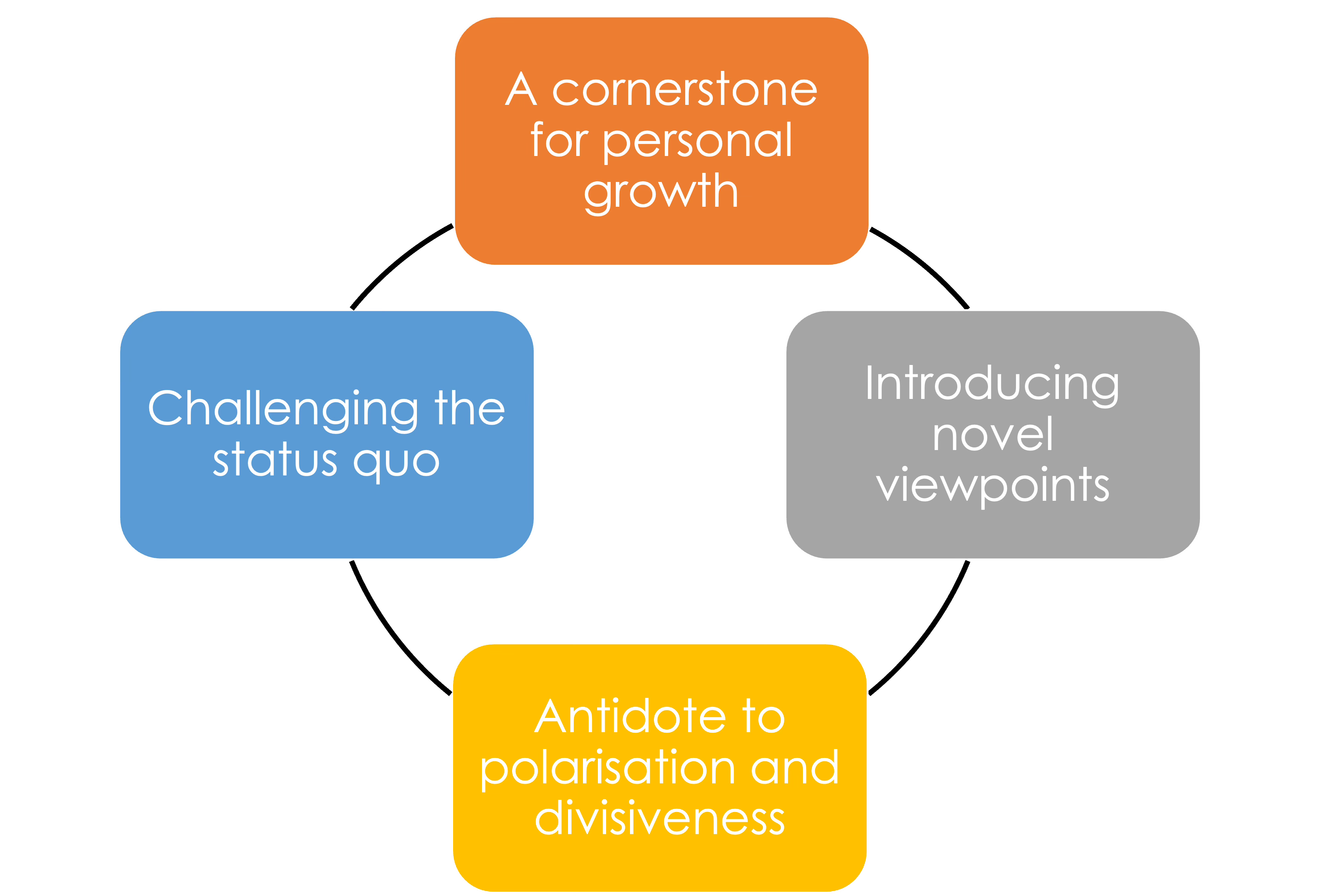
At the heart of the article lies the assertion that engaging with unfamiliar individuals is a cornerstone for our personal growth. The encounters with strangers, marked by their unpredictability and spontaneity, present opportunities for us to step outside our comfort zones. These interactions force us to confront our biases, preconceptions, and assumptions, fostering a level of self-awareness that is often elusive within the confines of familiar environments. The discomfort that may accompany talking to strangers becomes a crucible for personal development, pushing us to navigate the complexities of diverse perspectives and bridge the gaps that separate us from others.
On a societal level, the importance of talking to strangers becomes even more pronounced. The article suggests that insular social circles contribute to the reinforcement of echo chambers, limiting exposure to a narrow spectrum of ideas and perspectives. Engaging with strangers disrupts this echo, introducing novel viewpoints and challenging the status quo. This diversity of thought, injected into the societal discourse through seemingly casual conversations, becomes a driving force for innovation, progress, and adaptability.
Conversations with strangers, according to the article, serve as a powerful antidote to the polarisation and divisiveness that can permeate society. By breaking down the barriers that often exist between people from different backgrounds, talking to strangers fosters a sense of shared humanity. It humanises the "other," dismantling stereotypes and fostering empathy. In doing so, it becomes a mechanism for building bridges across social, cultural, and ideological divides, contributing to a more cohesive and interconnected society.
In conclusion, "The Vital Art of Talking to Strangers" illuminates the profound impact that seemingly casual conversations with unfamiliar individuals can have on personal and societal growth. By embracing the unfamiliar, we not only expand our own horizons but also contribute to the richness and resilience of the broader societal tapestry. Talking to strangers, far from being a peripheral aspect of social interaction, emerges as an essential art that has the potential to shape a more interconnected, understanding, and harmonious world.
Part 3 - The power of Active Listening
Turning our attention to "The Secrets of Successful Listening" from The Economist (also from 2021), we embark on an exploration of a skill often overshadowed in the cacophony of conversation - the art of active listening. This article illuminates the profound impact of attentive listening in fostering effective communication, emphasizing its role in nurturing understanding, empathy, and forging meaningful connections.
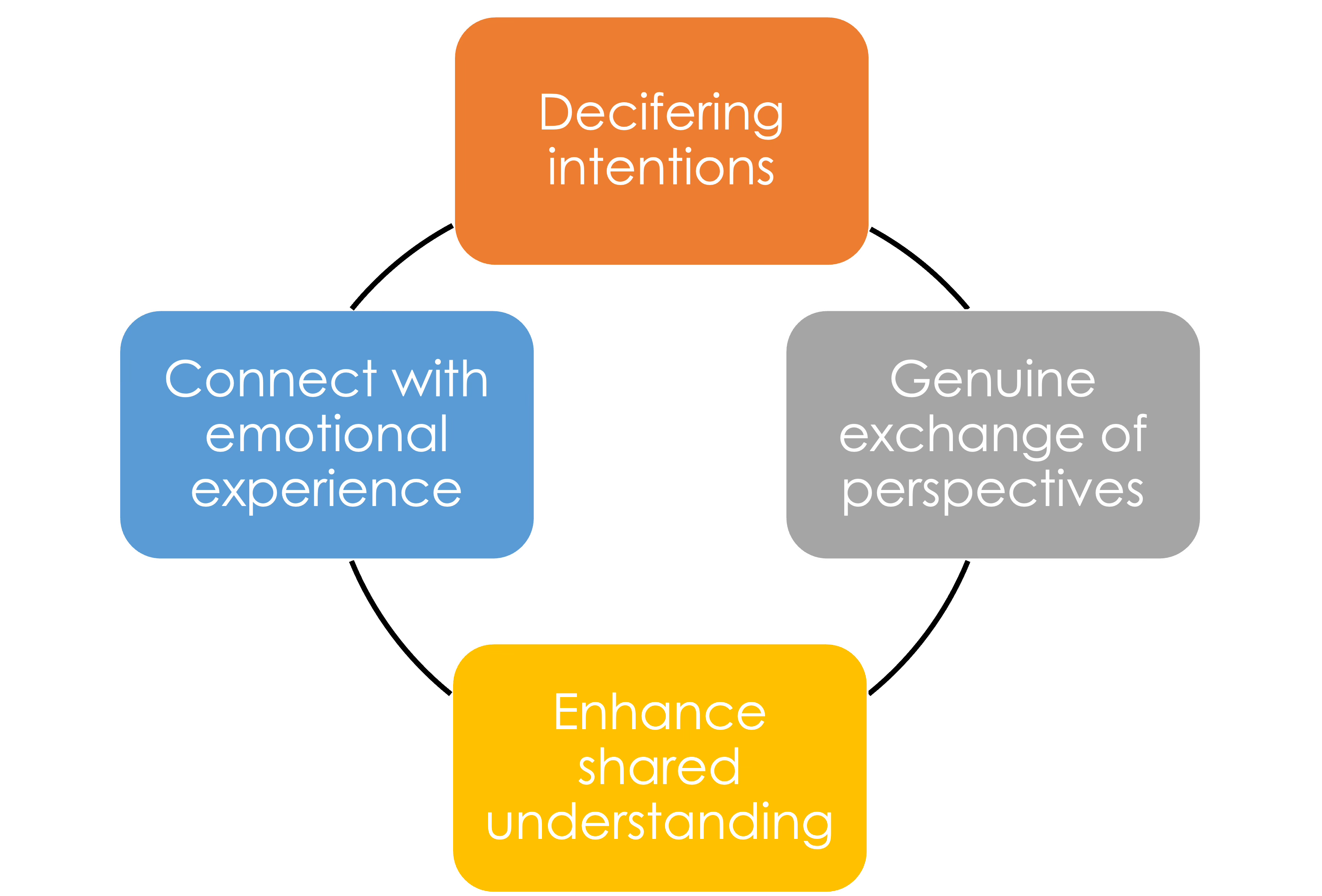
Active listening, as presented in the article, is not a passive reception of words but a dynamic and intentional engagement with the speaker. It involves not only hearing the words spoken but also deciphering the underlying emotions, nuances, and intentions behind the communication. The article posits that this form of listening is a cornerstone of effective communication, transforming dialogue from a mere exchange of information into a genuine exchange of perspectives and emotions.
The significance of active listening lies in its ability to enhance understanding between individuals. By giving undivided attention to the speaker, we can grasp not only the explicit content of the message but also the context, emotions, and motivations that accompany it. This depth of understanding transcends surface-level communication, allowing for a more nuanced and accurate interpretation of the speaker's intent. The article suggests that active listening acts as a bridge, narrowing the gap between divergent viewpoints and fostering a shared understanding.
Empathy, a quality often hailed as the bedrock of meaningful connections, finds its roots in the practice of active listening. The article highlights how empathetic listening involves not just understanding the speaker's perspective but also connecting with their emotional experience. By immersing oneself in the speaker's narrative, we -as active listeners- are better equipped to resonate with their feelings, fostering a sense of shared humanity. This empathetic connection transcends differences, promoting a deeper appreciation for the diversity of human experiences and perspectives.
Furthermore, the article suggests that active listening is a catalyst for meaningful connections. In a world characterised by rapid communication and digital interactions, the art of truly listening becomes a rare and precious commodity. The article contends that people who possess strong listening skills are not only sought after as communicators but are also adept at building and maintaining relationships. The act of being heard and understood creates a powerful bond, engendering trust and mutual respect.
In conclusion, "The Secrets of Successful Listening" underscores the transformative power of active listening in the realm of communication. Far from being a passive skill, it emerges as an active and intentional choice that enriches our understanding, nurtures empathy, and paves the way for meaningful connections. As we navigate the complex web of human interactions, the article encourages us to embrace the art of listening as a cornerstone for building bridges, fostering unity, and creating a more empathetic and interconnected world.
Part 4 - Synthesising Insights for Effective Conversations…
Upon synthesising the insights gleaned from "Chattering Classes," "The Vital Art of Talking to Strangers," and "The Secrets of Successful Listening," a comprehensive theory of effective conversations begins to unfold.
Intellectual conversations within the chattering classes, as discussed in Part 1, serve as crucibles for societal narratives, fostering diversity of thought and critical thinking. Engaging with strangers, as explored in Part 2, becomes a catalyst for our personal and societal growth, challenging preconceptions and injecting diversity into the societal discourse. Finally, active listening, illuminated in Part 3, emerges as the linchpin that transforms our dialogue into a nuanced exchange, fostering understanding, empathy, and meaningful connections.
… leadring to an harmonious conclusion
In the symphony of human interaction, conversations act as the orchestral score, shaping the melody of societal dynamics. The exploration of intellectual conversations within the chattering classes, the embrace of the unfamiliar through conversations with strangers, and the transformative power of active listening collectively offer a rich tapestry of insights. Intellectual discourse not only shapes societal narratives but also ensures their adaptability through diverse perspectives and critical thinking. Engaging with strangers becomes a potent force for our personal and societal growth, breaking down barriers and fostering unity. Active listening, the oft-overlooked art, emerges as the glue that binds these conversations, turning them into profound exchanges that nurture our understanding, empathy, and meaningful connections.
In the grand narrative of effective conversations, the synthesis of these principles becomes paramount.
A well-rounded dialogue, informed by intellectual rigour, open-mindedness to the unfamiliar, and the attentive embrace of active listening, holds the potential to redefine our conversations. It propels us towards a future where conversations become transformative forces, not only shaping our understanding of the world but also fostering a shared humanity.
As we reflect on the insights garnered from these articles, we are invited to reconsider the art of conversation – not merely as a means of communication but as a dynamic and powerful force that shapes the very fabric of our interconnected existence and with rhat the very faric of our organisations.