
Chasing coherence in complex project portfolios
How to seek success in today's programme and project driven global business environment

The Importance of Coherence
In today's dynamic and interconnected business environment, global organisations often find themselves managing a complex portfolio of programmes and projects spanning diverse industries, regions, and strategic objectives. The effective management of these projects is crucial for achieving organisational success and sustaining competitive advantage. This article explores the concept of coherence in these complex project portfolios, illustrating both its significance and implications through practical examples of success and failure.
Coherence in project portfolio management is not merely a theoretical concept; it is a critical factor that directly influences the success or failure of organisational initiatives. A coherent approach ensures that all projects within the portfolio are aligned with the overarching strategic objectives of the organisation, thereby maximising the likelihood of achieving desired outcomes. Without coherence, projects may veer off course, leading to wasted resources, missed opportunities, and ultimately, project failure.
One of the key benefits of coherence is its ability to facilitate efficient resource allocation and utilisation. In a coherent project portfolio, resources are allocated based on strategic priorities and organisational needs, rather than ad-hoc decision-making or political considerations. This ensures that resources are optimally utilised to support the most critical projects, enhancing overall portfolio performance and delivering greater value to the organisation.
Moreover, coherence fosters transparency and accountability in project portfolio management. When projects are aligned with strategic objectives, it becomes easier to track progress, evaluate performance, and make informed decisions. This transparency enables stakeholders to have a clear understanding of the rationale behind project selection, resource allocation, and risk management strategies, enhancing trust and confidence in the project portfolio management process.
INTERMEZZO - Typical Project Curves
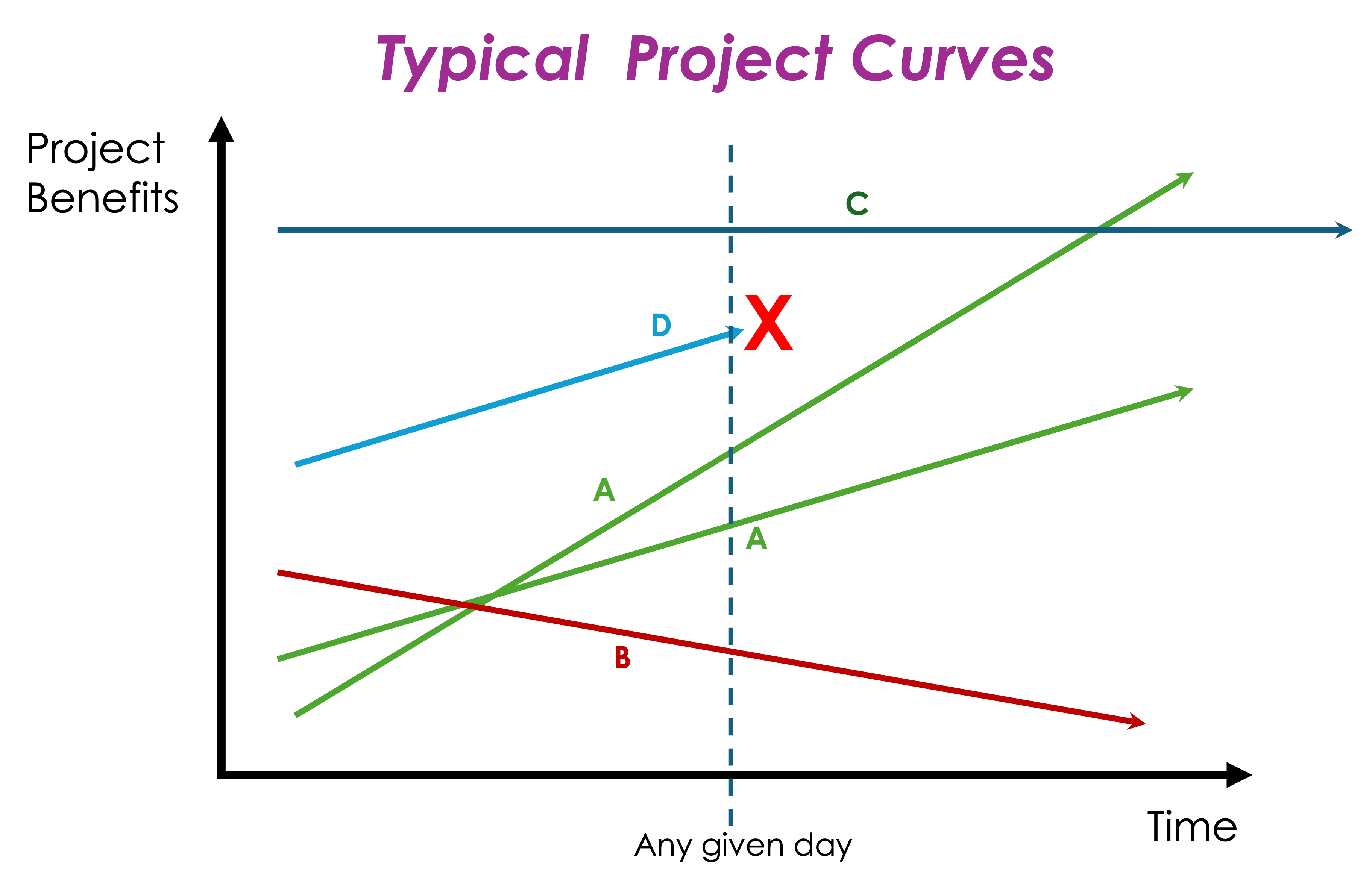
If we plot the benefits a project achieves over time we typically see these 4 types of curves:
Type A. These project start at a certain time and over time achieves its benefits. In this example there are 2 of these projects in the portfolio. Hopefully there are plenty of those
Type B. Alas, there are also projects that seem to have a negative benefit, despite their good intentions, but -once locked in, for instance after having signed expensive contracts with third parties- they need to continue
Type C. This looks like a project that is the pet project of the CEO. It never achieves anything, but given its sponsor it will continue ad infinitum
Type D. This type of project really goes somewhere. The benefits case look great, indeed. But on one day, a senior manager looks at the project portfolio and concludes that given the change/project/work overload, we need to stop this initiative, giving up on its promising benefits.
Recognise this picture?
Another aspect of coherence is its role in fostering collaboration and alignment among project teams and stakeholders. In a coherent project portfolio, teams work towards common goals, share knowledge and best practices, and leverage each other's expertise to maximise the overall impact of the portfolio. This collaboration not only enhances project outcomes but also creates a sense of camaraderie and shared purpose among team members, driving motivation and engagement.
Furthermore, coherence enables organisations to adapt to changing circumstances and market dynamics more effectively. By maintaining alignment with strategic objectives, organisations can quickly reallocate resources, reprioritise projects, and adjust their approach in response to new opportunities or threats. This flexibility is essential for navigating the uncertainties and complexities of the business environment and staying ahead of the competition.
Overall, coherence is a fundamental principle that underpins successful project portfolio management in global businesses. By ensuring alignment, integration, and collaboration across all aspects of the project portfolio, organisations can maximise the value delivered by their projects, achieve strategic objectives, and sustain competitive advantage in an increasingly complex and dynamic marketplace.
So, what is it we are talking about, exactly?
Coherence refers to the quality of being logical, consistent, and harmonious. In the context of project portfolio management, coherence implies alignment and integration across various dimensions, including strategic objectives, resource allocation, stakeholder engagement, and performance measurement, across the enetrprise.
Coherence is essential for ensuring that individual projects contribute synergistically to overarching organisational goals, thereby maximising the value delivered by the portfolio as a whole.
A Model for assessing coherence
Strategic Alignment, Resource Management, Communications, Stakeholder Engagement, and Performance Consistency are critical dimensions for assessing coherence in complex project portfolios, so let’s use these 5 dimensions to get to grips with the concept of coherence in our programme and project world.
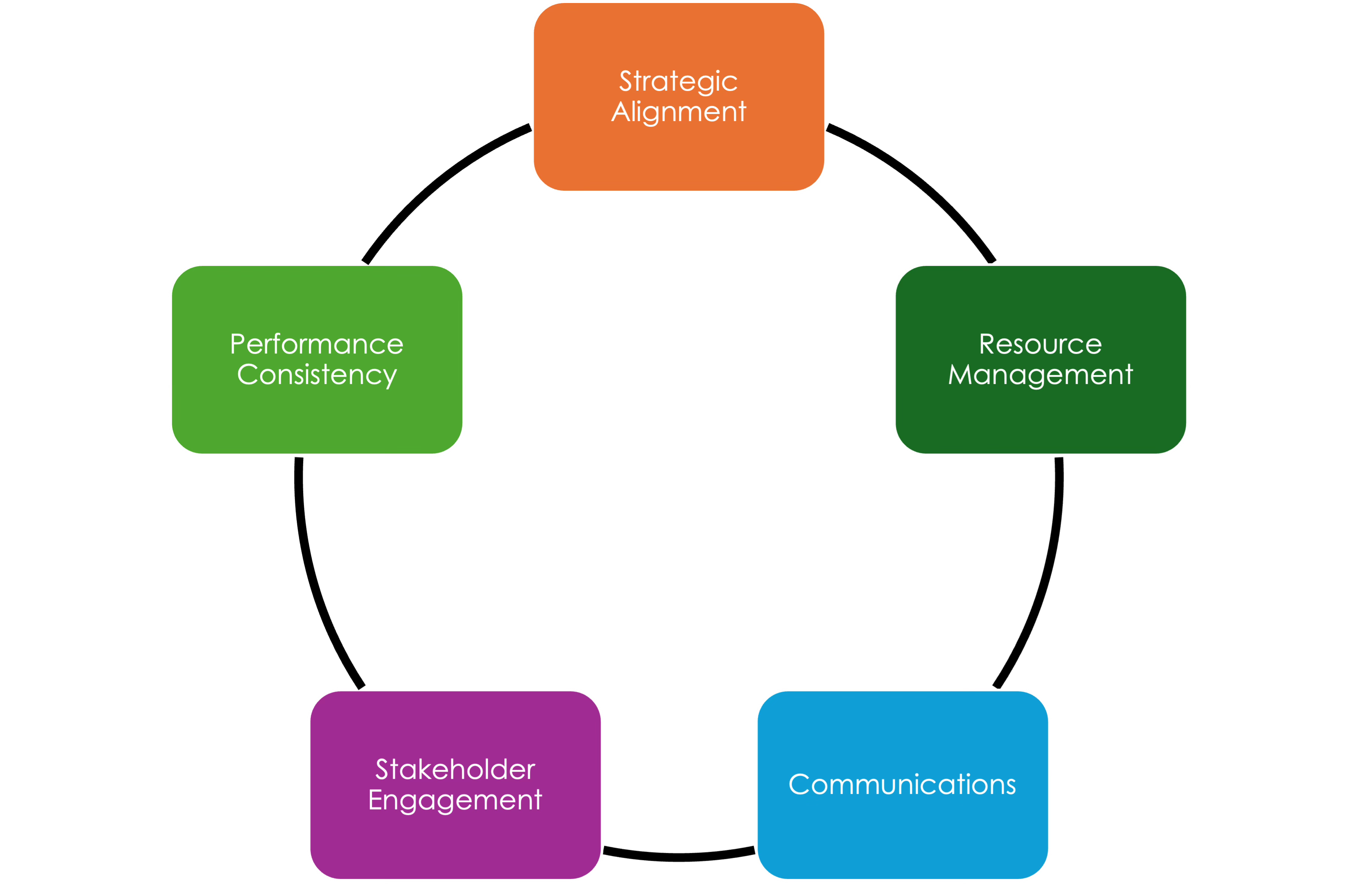
Strategic Alignment ensures that every project within the portfolio is directly contributing to the overarching strategic goals of the organisation, guiding decision-making and prioritisation efforts.
Effective Resource Management ensures that the necessary resources, including financial, human, and technological, are allocated optimally across projects to support their successful execution.
Clear and transparent Communications channels facilitate the flow of information and foster collaboration among project teams, stakeholders, and leadership, ensuring everyone is on the same page and aligned towards common objectives.
Stakeholder Engagement involves actively involving and addressing the needs and expectations of all relevant stakeholders throughout the project lifecycle, thereby fostering a sense of ownership, buy-in, and support.
Finally, Performance Consistency entails establishing and maintaining consistent performance metrics and evaluations across all projects, enabling effective monitoring, assessment, and course correction as needed to ensure continuous improvement and alignment with organisational objectives. Together, these dimensions form the foundation for achieving coherence in complex project portfolios, ensuring that projects are strategically aligned, well-resourced, effectively communicated, actively supported by stakeholders, and consistently delivering value to the organisation.
Applying the Model
Practical Example of Lacking Coherence
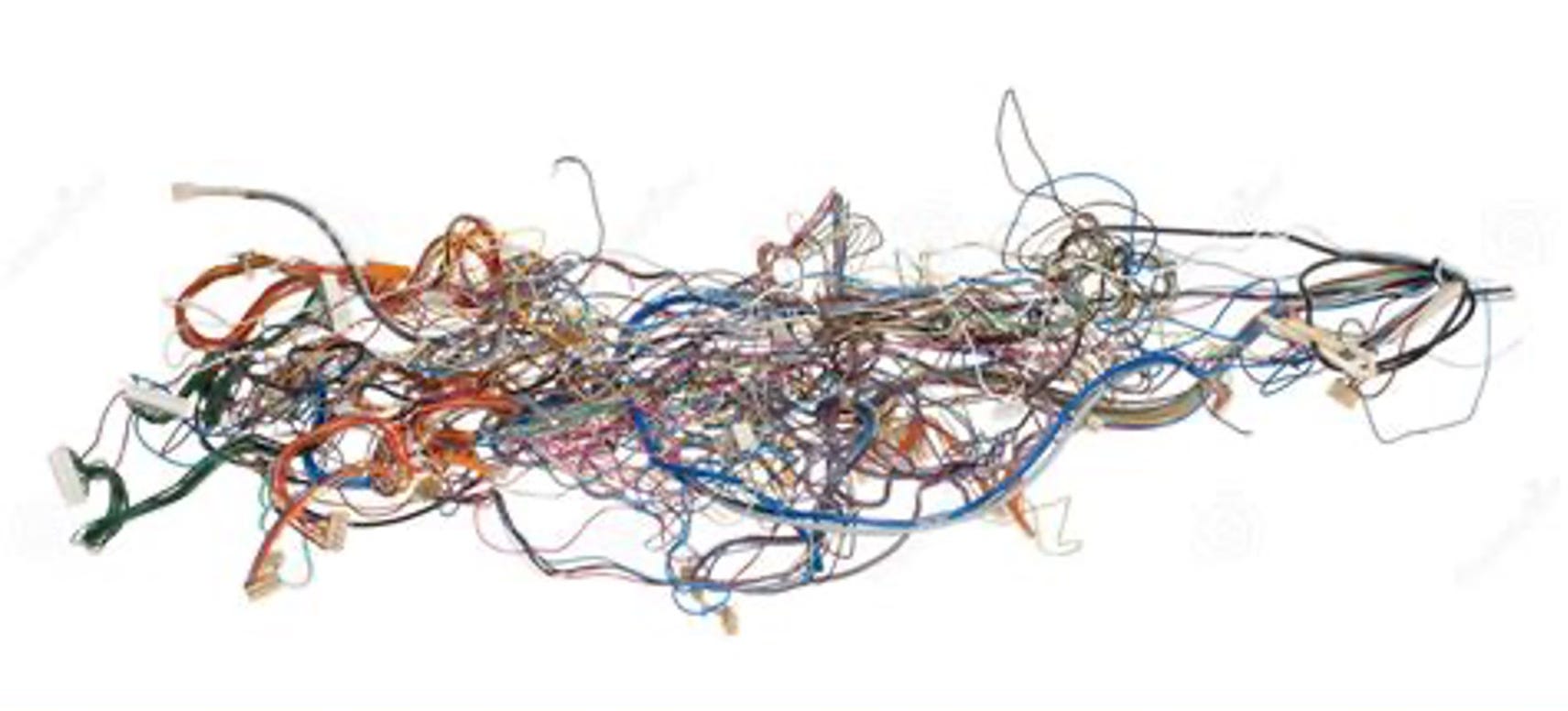
Consider a multinational conglomerate undertaking a strategic initiative to expand its market presence through a series of acquisitions across different industries. Despite the ambitious goals, the lack of coherence in managing the project portfolio leads to several challenges:
Strategic Misalignment
The conglomerate fails to articulate clear strategic objectives for the acquisition initiative, resulting in disparate and conflicting priorities among the acquired companies. Without a unified strategic direction, the integration efforts become fragmented, hindering the realisation of synergies and value creation.
Resource Fragmentation
In the absence of a cohesive resource management strategy, the conglomerate struggles to optimally allocate financial, human, and technological resources across the acquired companies. Some subsidiaries receive excessive resources, leading to inefficiencies and redundancies, while others face resource constraints, impeding their growth and performance.
Communication Breakdown
The conglomerate's decentralised organisational structure and inadequate communication channels exacerbate the challenges of managing the diverse portfolio of acquisitions. Information asymmetry and limited collaboration among the acquired companies impede the sharing of best practices, hindering the realisation of potential synergies and economies of scale.
Stakeholder Disengagement
Key stakeholders, including employees, customers, suppliers, and investors, feel disconnected from the acquisition initiative due to the lack of transparency and engagement. The absence of clear communication and involvement mechanisms erodes trust and confidence, leading to dissatisfaction and disengagement among stakeholders.
Performance Variability
Without consistent performance measurement and monitoring mechanisms, the conglomerate struggles to assess the effectiveness and impact of individual acquisitions. Wide variability in performance outcomes across the portfolio further exacerbates the challenges of evaluating the overall success and value generated by the initiative.
Practical Example of Successful Coherence

Contrastingly, consider a global technology company embarking on a strategic initiative to develop a suite of interconnected products aimed at revolutionising the consumer electronics market. Through a coherent approach to managing the project portfolio, the company achieves notable success:
Strategic Alignment
The technology company articulates a clear vision and strategic objectives for the product development initiative, emphasising innovation, customer experience, and market differentiation. All projects within the portfolio are aligned with these overarching goals, ensuring focused efforts and unified direction.
Integrated Resource Management
The company conducts comprehensive resource assessments to identify and allocate the necessary talent, funding, and technology to support the development of the product suite. Resources are managed centrally, allowing for efficient utilisation and coordination across different projects and functional areas.
Collaborative Governance
A robust governance structure is established, featuring cross-functional teams and regular project reviews led by senior leadership. Transparent decision-making processes ensure alignment with strategic objectives and enable timely resolution of issues and conflicts.
Stakeholder Engagement
The company actively engages with key stakeholders, including customers, suppliers, and internal teams, throughout the project lifecycle. Their input and feedback are incorporated into the design, production, and marketing of the products, fostering a sense of ownership and loyalty among stakeholders.
Performance Excellence
Performance metrics and key performance indicators (KPIs) are defined and tracked consistently across all projects within the portfolio. Regular performance reviews and evaluations allow the company to monitor progress, identify areas for improvement, and celebrate achievements, driving continuous innovation and excellence.
What do these practical examples tell us?
The practical examples provided earlier illustrate the real-world implications of coherence, both in terms of its benefits and challenges. In the case of the multinational conglomerate, the lack of coherence in managing the portfolio of acquisitions resulted in a range of issues, including strategic misalignment, resource fragmentation, communication breakdown, stakeholder disengagement, and performance variability.
This example underscores the importance of coherence in project portfolio management and highlights the potential consequences of neglecting this critical aspect. Without coherence, organisations risk wasting resources, missing opportunities, and failing to realise the full potential of their projects and initiatives.
Conversely, the example of the global technology company demonstrates the positive outcomes that can be achieved through a coherent approach to managing project portfolios. By aligning projects with strategic objectives, integrating resource management practices, fostering collaboration and stakeholder engagement.
In conclusion…
…. coherence plays a pivotal role in the success of complex project portfolios in global business endeavours. The practical examples presented highlight the significant impact of coherence on various aspects of project portfolio management, including strategic alignment, resource management, stakeholder engagement, and performance measurement. By adopting a coherent approach, organisations can navigate the complexities of managing project portfolios effectively, maximising value creation and sustaining competitive advantage in today's dynamic business landscape.
How well does your organisation manage its project portfolio?
Do you feel they hang together, or are there as many ups, downs and ‘I don’t knows’ as in the ‘Typical Project Curves’. image?